
Traditional chemotherapy faces a fundamental limitation: most anticancer drugs are toxic to both malignant and healthy cells. Systemic distribution leads to well-known side effects — hair loss, immune suppression, gastrointestinal damage, and organ toxicity. The challenge is not only killing cancer cells but doing so selectively.
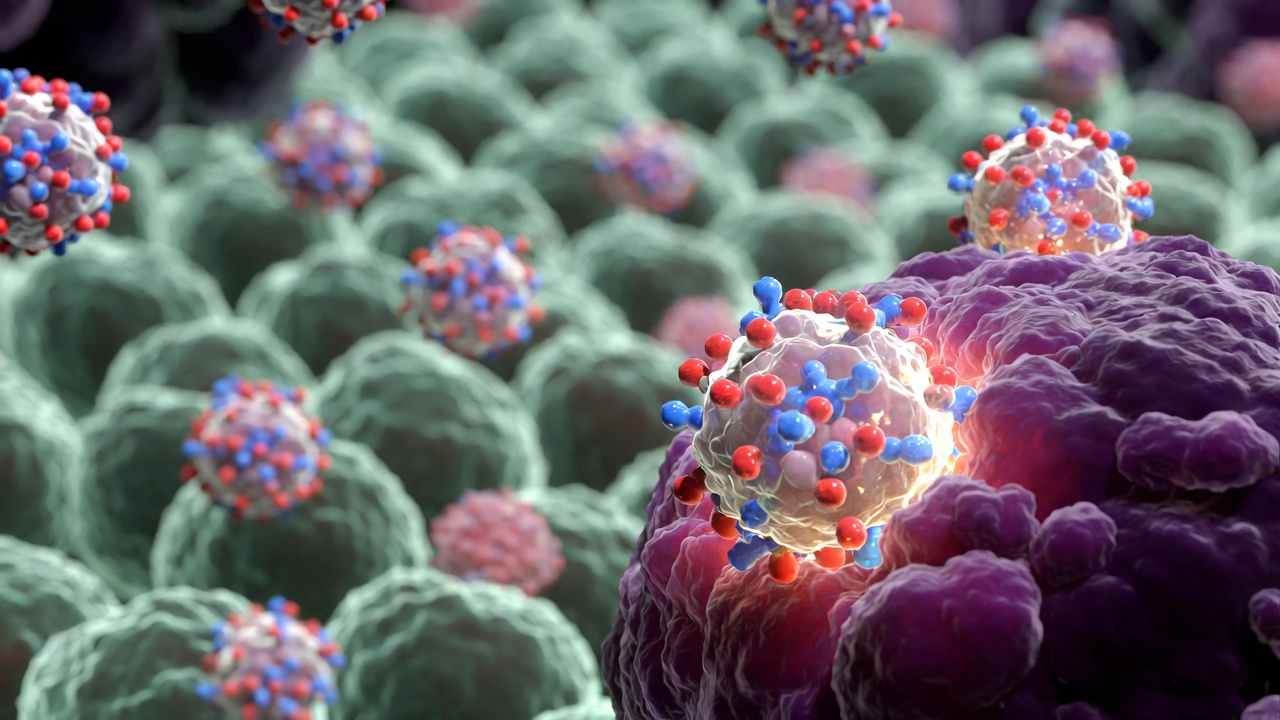
Nanoparticle drug delivery systems aim to change this equation. By packaging therapeutic agents inside engineered carriers typically ranging from 10 to 200 nanometers, researchers can alter how drugs circulate, accumulate, and interact with tumors. The goal is simple in concept but complex in practice: maximize concentration at the tumor while minimizing exposure elsewhere.
Why Size Matters at the Nanoscale
Nanoparticles occupy a biological “sweet spot.” They are small enough to circulate through blood vessels but large enough to avoid rapid kidney clearance. Their size also influences cellular uptake mechanisms, circulation time, and biodistribution.
Particles below roughly 5–10 nm are often filtered out by the kidneys, while those above ~200 nm risk sequestration by the spleen or liver. Most oncology-focused platforms therefore fall within an intermediate range optimized for systemic delivery.
Surface properties are equally critical. Coatings such as polyethylene glycol (PEG) are frequently used to reduce recognition by the immune system, prolonging circulation time — a strategy known as “stealth” design.
Passive Targeting: The EPR Effect
One of the earliest rationales for nanoparticle oncology was the Enhanced Permeability and Retention (EPR) effect. Tumor blood vessels are typically disorganized and leaky, with gaps between endothelial cells that allow nanoparticles to escape into surrounding tissue.
Additionally, tumors often lack efficient lymphatic drainage, causing particles that enter to remain trapped.
In theory, this creates natural accumulation of nanoparticles at tumor sites without requiring molecular targeting.
However, real-world results have been mixed. The EPR effect varies widely between tumor types, stages, and individual patients. Some human tumors exhibit far less permeability than animal models used in preclinical research.
Active Targeting: Molecular Recognition
To improve specificity, many systems incorporate ligands on the nanoparticle surface that bind to receptors overexpressed on cancer cells.
Common targeting strategies include:
- Antibodies against tumor-associated proteins
- Peptides that bind specific receptors
- Small molecules such as folate derivatives
- Aptamers with high binding affinity
Once bound, nanoparticles can be internalized through receptor-mediated endocytosis, delivering drugs directly inside malignant cells.
Despite its promise, active targeting does not guarantee exclusive tumor accumulation. Nanoparticles must first reach the tumor region via circulation, meaning passive processes still play a major role.
Drug Release Mechanisms
Carriers must not only reach tumors but also release their payload effectively. Several triggers are used:
pH-Sensitive Release
Tumor environments are often more acidic than normal tissue. Materials designed to degrade under low pH can release drugs preferentially within tumors or intracellular compartments.
Enzyme-Responsive Systems
Certain enzymes are overexpressed in cancer tissue. Nanoparticles engineered with enzyme-cleavable bonds can exploit this difference.
Thermal or External Activation
Some platforms respond to heat, ultrasound, or magnetic fields, allowing localized activation from outside the body.
Controlled Diffusion
Simpler systems release drugs gradually over time as molecules diffuse out of the carrier.
Each method involves trade-offs between reliability, safety, and manufacturing complexity.
Lipid Nanoparticles vs Polymer-Based Systems
Two major classes dominate clinical development.
Lipid Nanoparticles (LNPs)
These are structurally similar to cell membranes and are widely used for nucleic acid delivery, including mRNA therapies. Their biocompatibility and ability to encapsulate fragile molecules make them attractive.
However, they may accumulate in the liver and spleen, raising concerns about off-target exposure.
Polymer Nanoparticles
Constructed from synthetic or biodegradable polymers, these can offer more precise control over size, degradation rate, and drug release profiles.
Some polymers degrade into non-toxic metabolites, while others may provoke immune responses depending on composition.
Toxicity Profiles: Not Automatically Safer
A common misconception is that nanoparticle delivery eliminates toxicity. In reality, it redistributes risk rather than removing it.
Potential concerns include:
- Accumulation in organs such as liver and spleen
- Immune activation or hypersensitivity reactions
- Long-term persistence of non-biodegradable materials
- Complement activation-related pseudoallergy (CARPA)
- Interference with normal cellular processes
Surface chemistry, particle size, and dose all influence safety outcomes.
Biological Barriers Inside Tumors
Even after reaching the tumor site, nanoparticles face additional obstacles:
- Dense extracellular matrix limiting penetration
- High interstitial fluid pressure pushing particles outward
- Heterogeneous blood supply
- Regions of hypoxia or necrosis
As a result, particles often accumulate near blood vessels but fail to reach deeper tumor regions.
Researchers are exploring strategies such as size-changing particles or enzymatic matrix degradation to improve penetration.
Clinical Reality vs Laboratory Promise
Several nanoparticle-based cancer drugs are already approved, demonstrating that the concept can work. However, the magnitude of benefit varies, and not all platforms outperform conventional formulations.
Clinical success depends on multiple factors:
- Tumor type and location
- Patient physiology
- Drug characteristics
- Manufacturing consistency
- Dosing strategy
Large-scale production must maintain tight control over particle size distribution and stability — a significant engineering challenge.
The Future: Precision Nanomedicine
Next-generation systems aim to integrate diagnostics and therapy into a single platform, sometimes called “theranostics.” These particles could image tumors, deliver treatment, and monitor response simultaneously.
Other research directions include:
- Multi-drug carriers for combination therapy
- Immune-modulating nanoparticles
- Gene-editing delivery systems
- Personalized formulations tailored to patient biomarkers
Artificial intelligence is increasingly used to optimize particle design by modeling complex interactions between materials and biological systems.
Bottom Line
Nanoparticle drug delivery does not magically eliminate the challenges of cancer therapy, but it offers powerful tools for reshaping how drugs interact with the body. By altering circulation time, targeting mechanisms, and release behavior, these systems can increase tumor exposure while reducing systemic damage.
The balance between targeting efficiency and toxicity remains the central engineering problem. Too stable, and the drug never reaches its target; too fragile, and it behaves like conventional chemotherapy.
As materials science, molecular biology, and clinical research converge, nanoparticle platforms are moving from experimental concepts toward a core component of modern oncology — not a universal cure, but a critical step toward more precise and tolerable cancer treatment.
References
- Zhang, Y., Roberts, K., & Garcia, P. (2026). Recent Advances in Targeted Nanoparticle Therapies for Solid Tumors. Nature Reviews Cancer, 26(1), 45-60.
- Roberts, K., & Garcia, P. (2025). Evaluating Long-Term Toxicity of Novel Nanocarriers. Advanced Drug Delivery Reviews, 205, 115-130.