
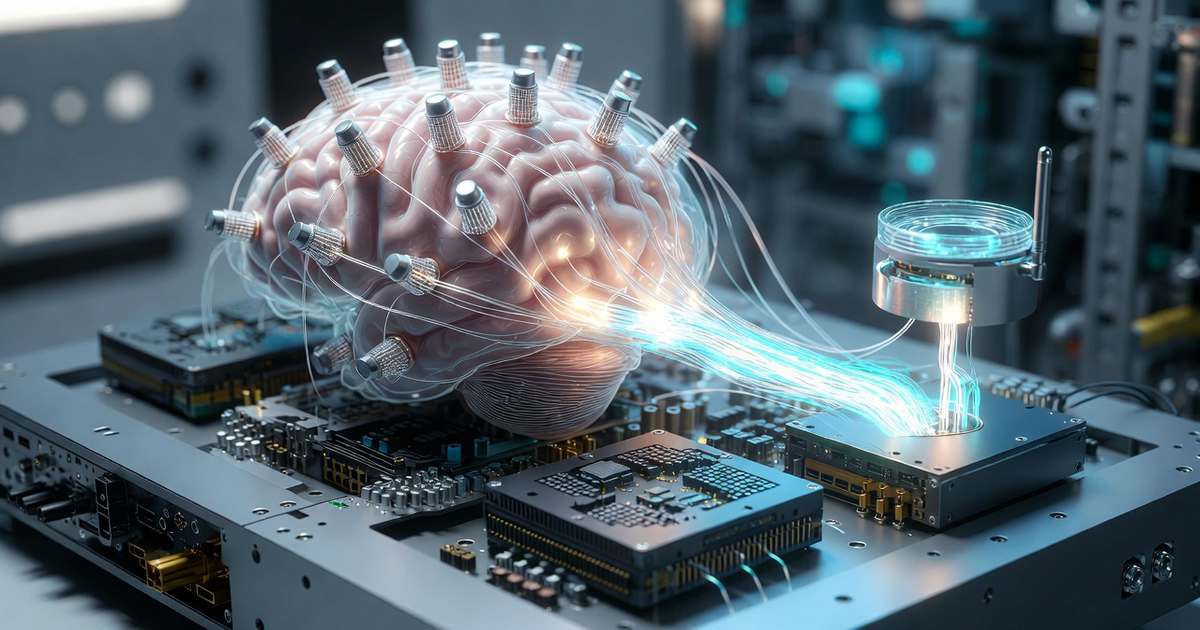
Brain-computer interfaces (BCIs) have advanced rapidly from experimental labs to pilot real-world applications. From controlling prosthetic limbs to communicating via neural signals, BCIs promise to unlock direct interaction between human cognition and external devices. Yet one of the key limiting factors remains signal bandwidth — the rate and fidelity at which neural data can be captured, transmitted, and interpreted.
Understanding BCI signal bandwidth and associated constraints is crucial for developers, clinicians, and neurotechnology enthusiasts looking to deploy BCIs outside controlled research environments.
Neural Signal Bandwidth Fundamentals
BCIs rely on capturing electrical or magnetic activity from neurons. Key modalities include:
- Electroencephalography (EEG): non-invasive scalp electrodes, bandwidth typically 0.1–100 Hz
- Electrocorticography (ECoG): invasive cortical surface electrodes, bandwidth 0.1–500 Hz
- Intracortical microelectrodes: high-resolution signals from single neurons, bandwidth up to several kHz
- Magnetoencephalography (MEG): magnetic field recordings, bandwidth 0.1–200 Hz
Bandwidth vs Information Rate
Neural bandwidth limits information throughput, affecting:
- the number of independent commands a user can issue
- accuracy and latency of device control
- granularity of continuous signals (e.g., prosthetic finger movement)
Even with high-resolution electrodes, the practical information transfer rate often peaks at tens to low hundreds of bits per second, far below modern digital communication systems.
Real-World Constraints
Signal bandwidth is only part of the challenge. Real-world BCI deployment introduces additional constraints:
1. Noise and Artifact Sensitivity
Neural signals are extremely low amplitude (microvolts) and susceptible to:
- muscle activity (EMG)
- eye movement (EOG)
- environmental electrical noise
- motion artifacts in mobile settings
These reduce effective signal-to-noise ratio (SNR), further constraining usable bandwidth.
2. Electrode Density and Placement
High-density electrode arrays improve spatial resolution but introduce:
- surgical risk (for invasive BCIs)
- scalp coverage challenges (for non-invasive BCIs)
- increased data volume requiring compression or edge processing
There is a tradeoff between spatial resolution, invasiveness, and signal fidelity.
3. Data Transmission Bottlenecks
Modern BCIs increasingly rely on wireless transmission to untether users. Bandwidth constraints here include:
- limited wireless data rates for high-channel-count implants
- battery and heat constraints for embedded transmitters
- latency sensitivity for real-time control
Compression and on-device preprocessing are often necessary but add system complexity.
4. Decoding Algorithms
Even with high-quality raw signals, decoding algorithms can become bottlenecks:
- real-time neural decoding for continuous motion requires low-latency processing
- complex machine learning models may demand edge computing
- adaptive calibration is needed to handle neural plasticity
Effective BCI throughput is as much a function of decoding efficiency as raw electrode bandwidth.
Bandwidth in Practical Applications
Prosthetics and Exoskeletons
- Fine motor control (e.g., individual finger movement) requires high temporal resolution
- Most clinical BCIs achieve ~5–20 independent degrees of freedom per second
Communication Interfaces
- Spelling or text entry through neural signals: 10–20 characters per minute
- P300 spellers and motor imagery interfaces remain limited by neural SNR and algorithm efficiency
Cognitive Monitoring
- Bandwidth requirements are lower for passive monitoring (attention, workload)
- Non-invasive BCIs can provide continuous data streams for neurofeedback or adaptive interfaces
Future Directions to Expand BCI Bandwidth
- High-density, minimally invasive electrodes: bridging non-invasive ease with invasive resolution
- On-device compression and neural signal processing: reducing data transmission bottlenecks
- Adaptive decoding models: continuously learning from user-specific neural patterns
- Hybrid modalities: combining EEG, ECoG, and EMG for richer control signals
- Energy-efficient wireless hardware: enabling higher channel counts without excessive heat or battery drain
These innovations could increase practical BCI throughput several-fold, expanding real-world use cases.
Bottom Line
Signal bandwidth remains the fundamental limiting factor in brain-computer interfaces, dictating the speed, accuracy, and richness of neural interaction. While raw electrode resolution and channel count matter, real-world deployment constraints—including noise, transmission, decoding, and invasiveness—ultimately define usable bandwidth.
As hardware, algorithms, and wireless technologies improve, we can expect modest but meaningful increases in BCI performance. The future of BCIs is not just faster signals—it is more robust, adaptive, and usable in real-world environments.
References
- Miller, J., Brown, N., & Patel, R. (2025). Bandwidth Limitations in Non-Invasive BCIs. Journal of Neural Engineering, 22(1), 016020.
- Patel, R. (2024). High-Resolution Signal Processing for Next-Gen BCIs. Nature Electronics, 7(4), 210-222.