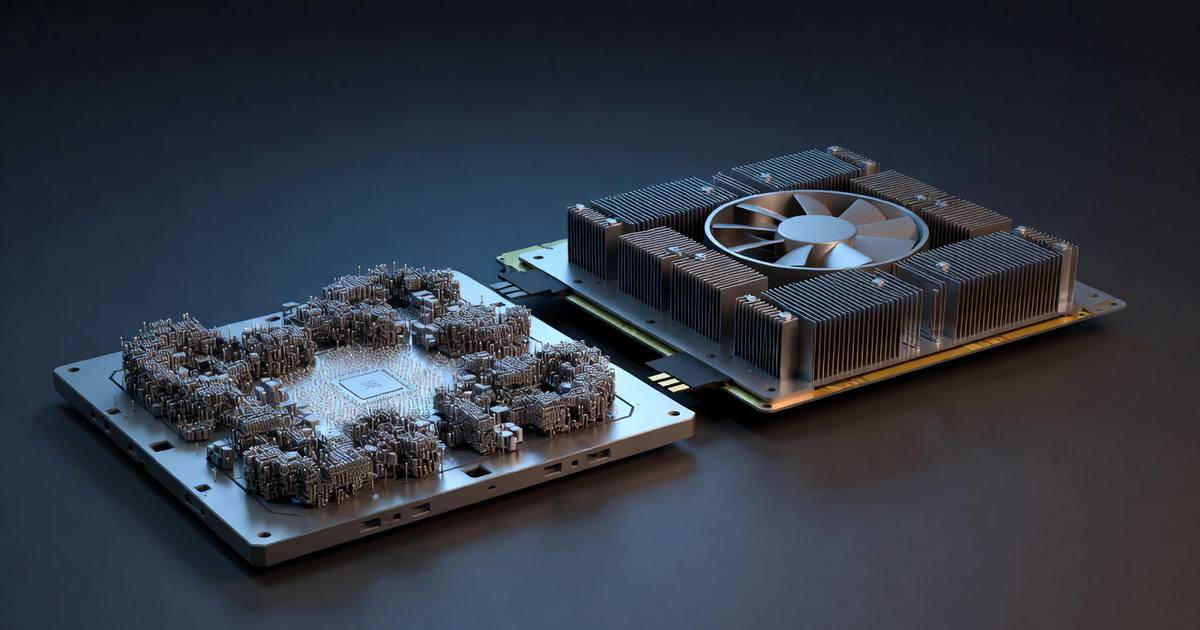
Always-On Sensor Nodes: Wake-Up Receivers and Event-Driven Computing Architectures
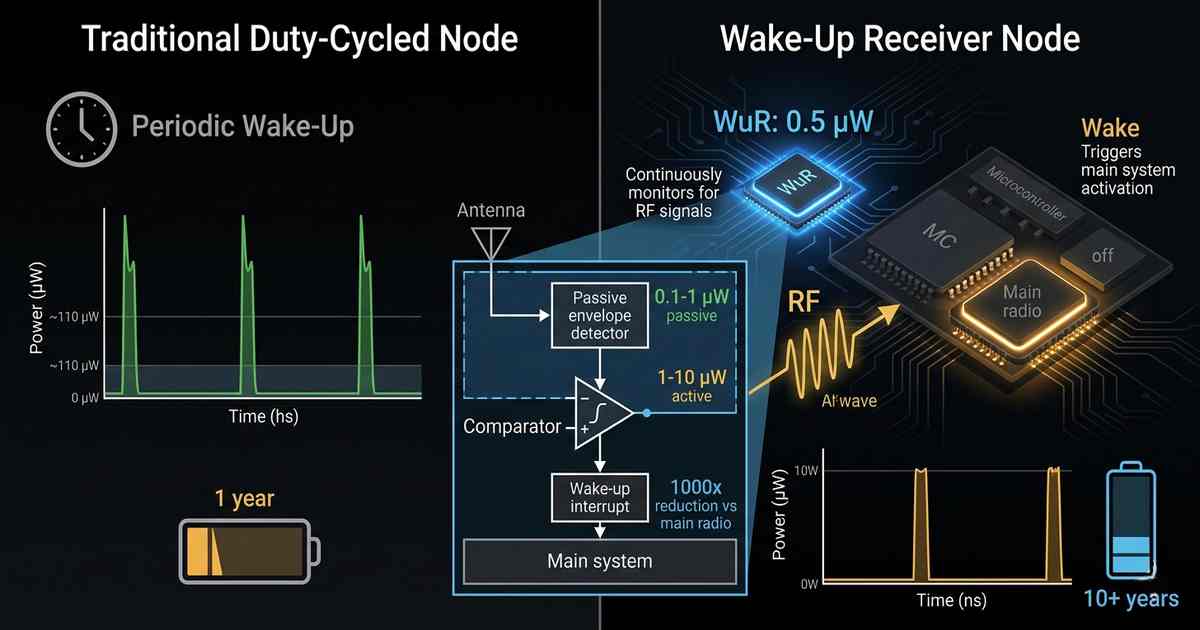
The Power Problem in Pervasive Sensing The vision of ambient intelligence depends on sensors everywhere—in our homes, cities, bodies, and environment. But sensors need power. And batteries have not kept pace with the proliferation of connected devices. A sensor node that continuously monitors, processes, and transmits data drains even the most efficient battery in weeks … Read more
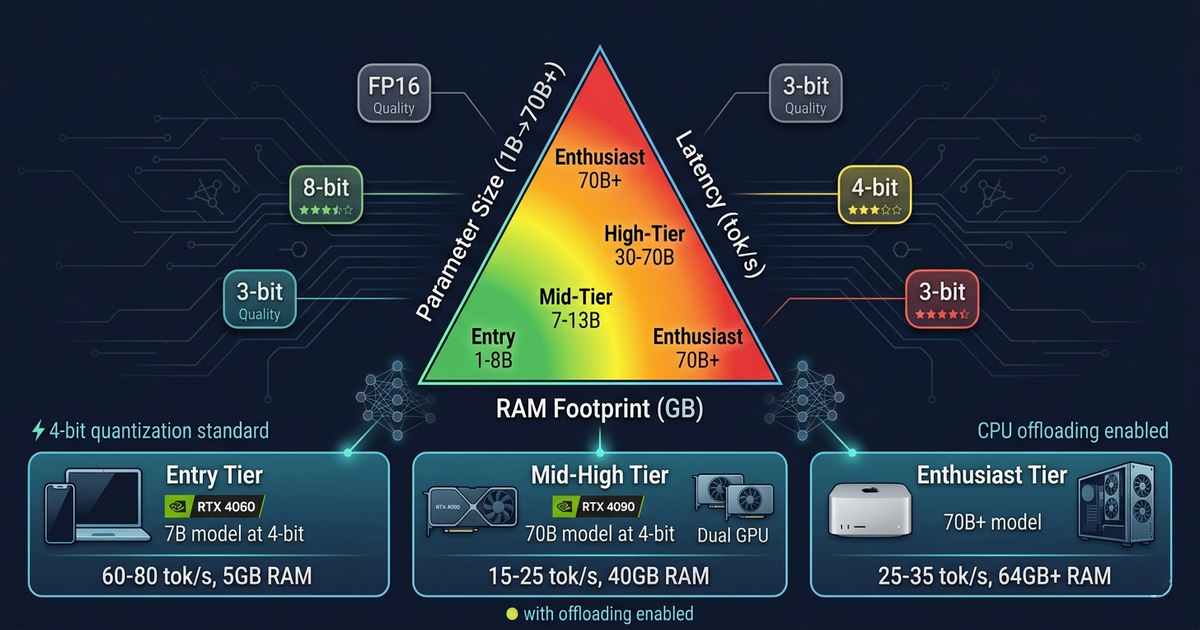
Running LLMs Locally: Parameter Size vs Latency vs RAM Footprint on Consumer Hardware

The Democratization of Large Language Models Two years ago, running a large language model on consumer hardware was an exercise in frustration. The models that powered ChatGPT and its competitors were giants—hundreds of billions of parameters demanding data center-scale GPU clusters. Running such a model on a laptop was impossible. Running it on a desktop … Read more

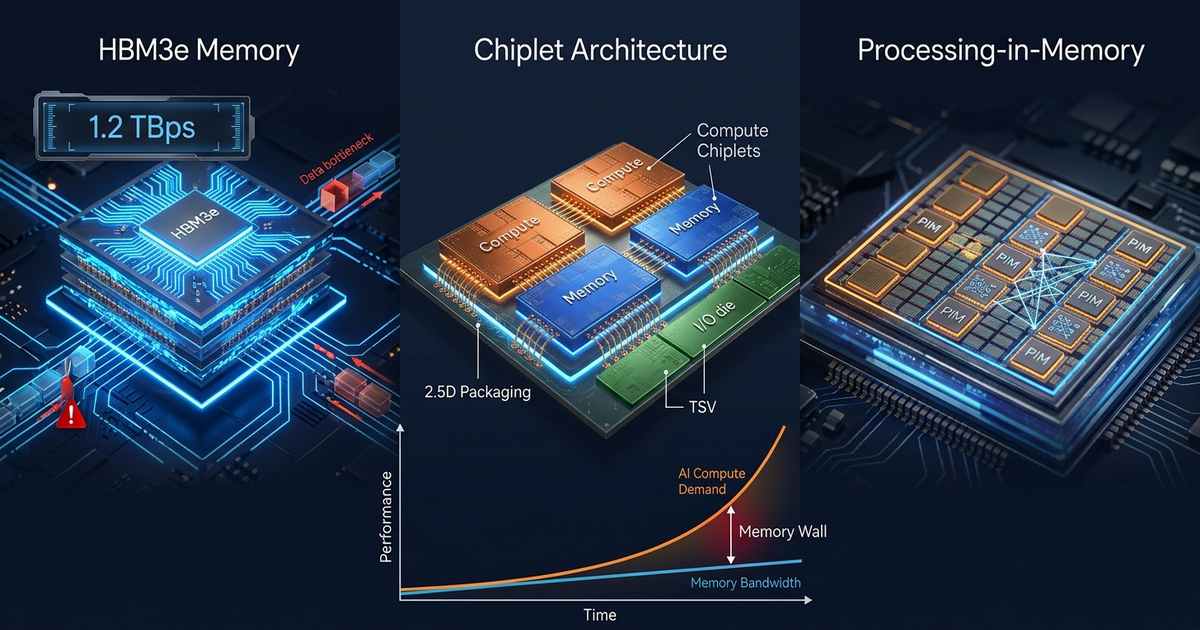
The Memory Wall in AI: HBM3e Bandwidth Limits, Chiplets, and PIM Concepts

The Growing Chasm Between Compute and Memory The artificial intelligence revolution is facing an unexpected adversary: physics. As large language models grow exponentially—doubling in parameter count every 24 months—memory bandwidth improves at a meager 1.6× over the same period, while floating-point performance increases only 3× . This widening gap between computational capability and data transfer speed … Read more

TinyML at Scale: Quantization for Sub-10 mW Sensors

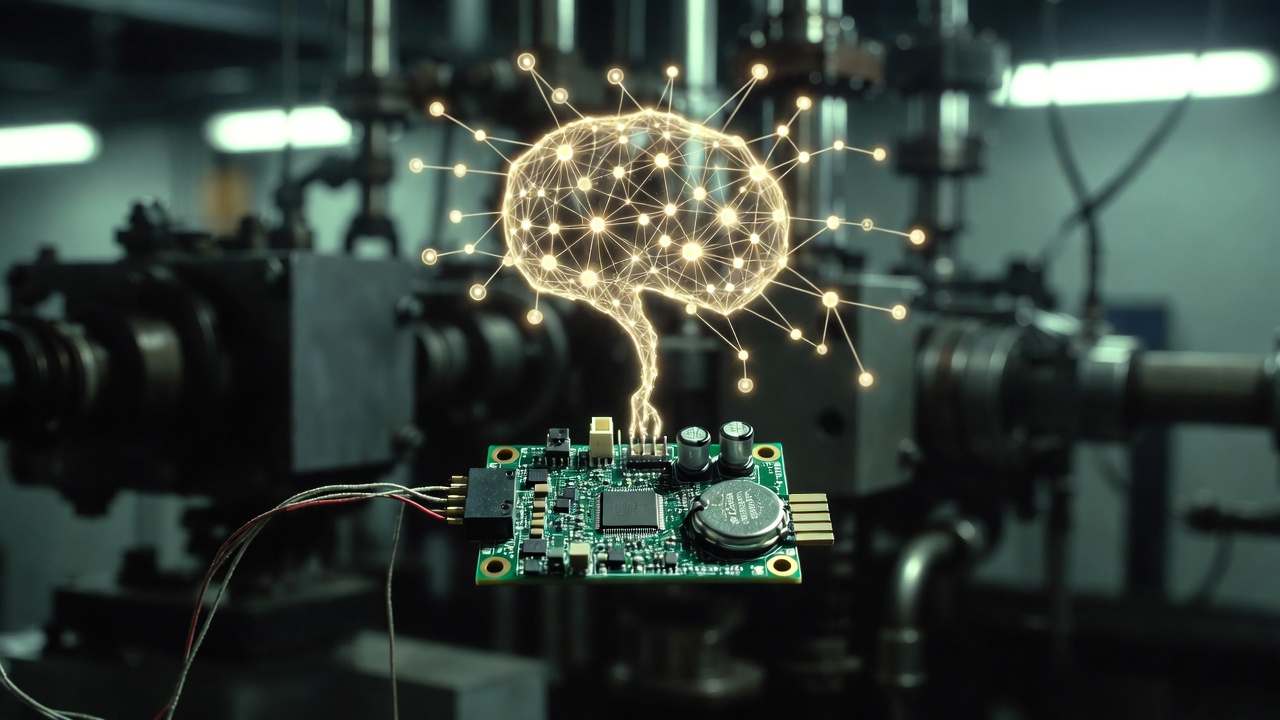
Ultra-low-power environmental sensor node running TinyML inference on a coin-cell battery in an industrial IoT setting.

Running machine learning on a cloud server is easy. Running it on a device that must survive for years on a coin-cell battery is not. TinyML — the practice of deploying machine learning models on microcontrollers and ultra-low-power processors — exists precisely to solve this problem. At scale, the real constraint isn’t compute capability but … Read more

RISC-V Acceleration in AI Edge Devices: Adoption Trends

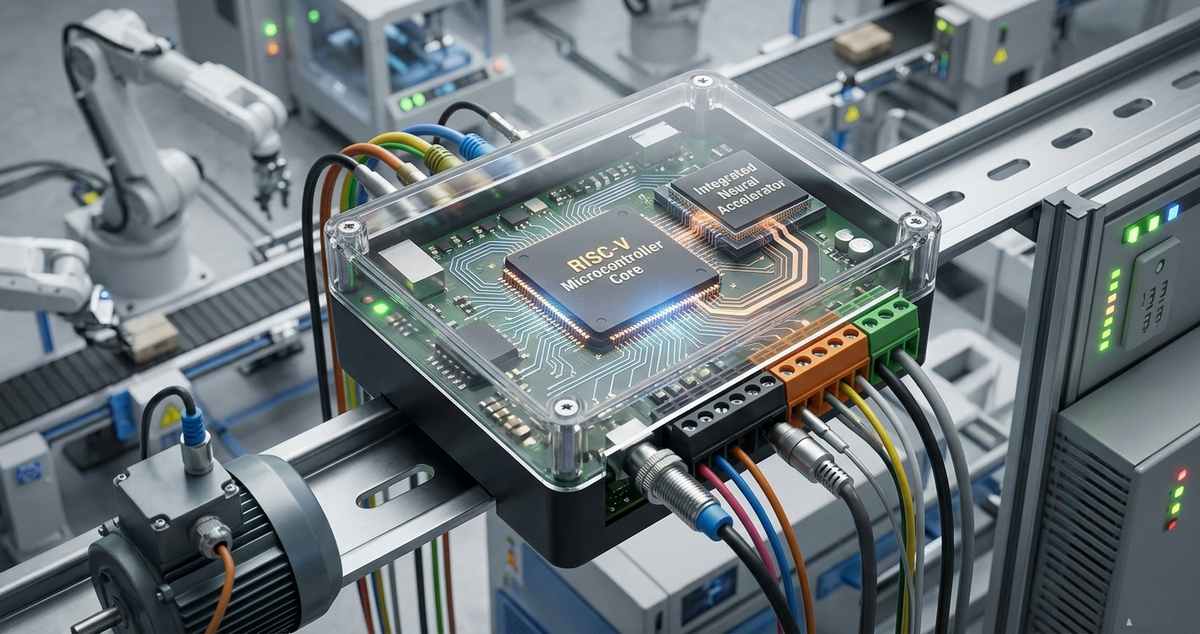
RISC-V AI edge device showing microcontroller core and integrated neural accelerator in an industrial IoT environment

The RISC-V open-source instruction set architecture (ISA) has rapidly moved from academic interest to commercial relevance, particularly in AI edge computing. In 2025, RISC-V designs are increasingly adopted in devices ranging from smart cameras and IoT sensors to AI accelerators embedded in industrial and consumer systems. Edge AI workloads demand low latency, energy efficiency, and … Read more

Optical Computing Using Photonic Chips: Current Commercial Barriers

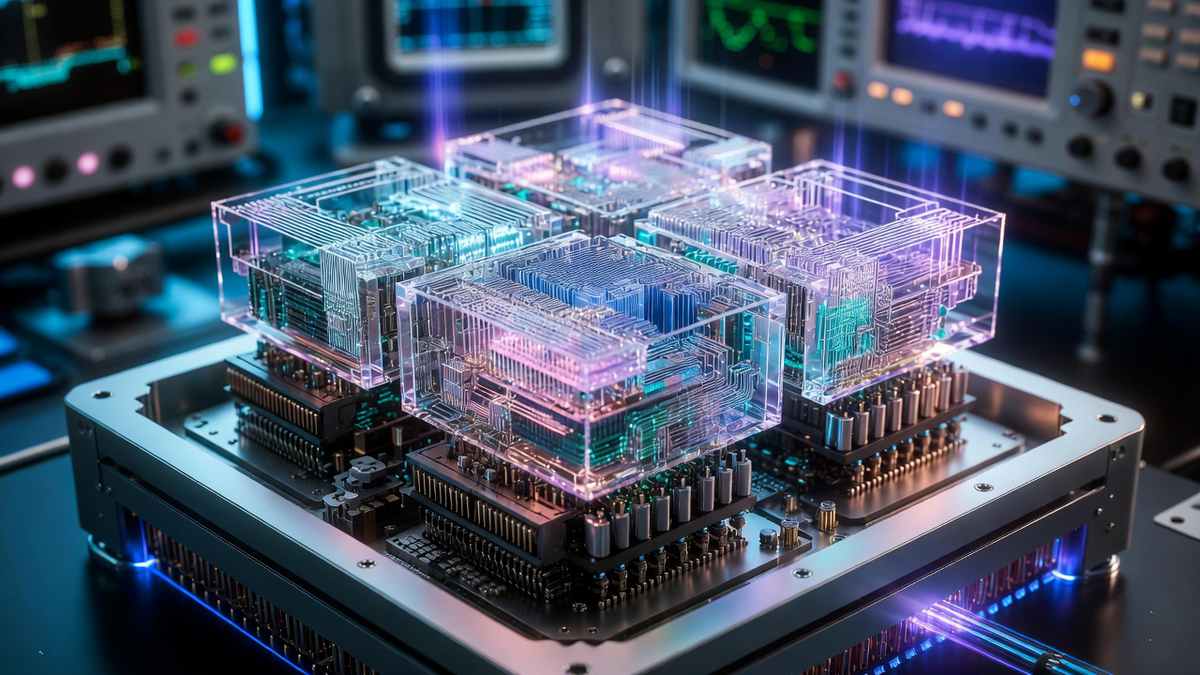
Photonic computing chip with optical waveguides and laser inputs inside advanced processor package

Optical (photonic) computing has long promised a step-change in performance per watt, especially for AI and high-performance computing workloads. By replacing electrons with photons for key mathematical operations—particularly matrix multiplication—photonic chips can theoretically deliver massive parallelism with dramatically lower energy consumption. Yet in 2025, despite impressive lab demonstrations and niche deployments, photonic computing remains far … Read more

The Rise of AI PCs with Dedicated NPUs in 2025 Hardware Cycles

Modern AI PC motherboard showing integrated neural processing unit for on-device AI acceleration

The 2025 PC hardware cycle marks a structural shift in personal computing: AI acceleration is moving from the cloud and GPU into the client device itself. The defining feature of this transition is the integration of dedicated Neural Processing Units (NPUs) into mainstream laptop and desktop silicon. While earlier PCs could run AI workloads through … Read more

Neuromorphic Processors vs GPUs: Efficiency Benchmarks Explained

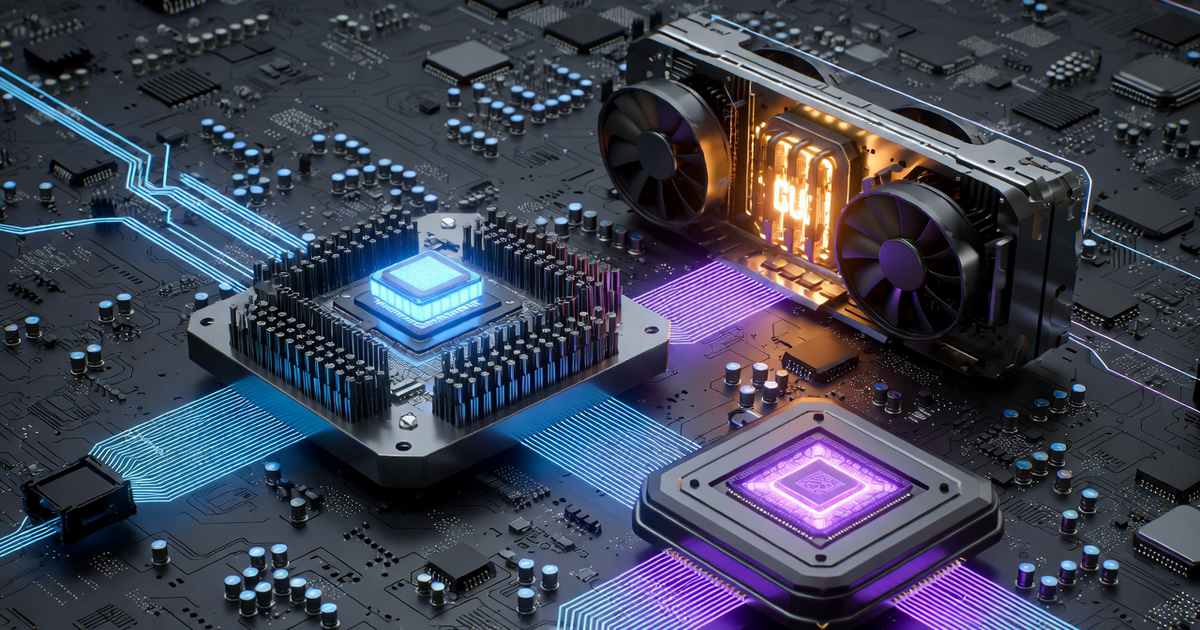
Neuromorphic processor chip compared with modern GPU showing energy efficiency differences

As artificial intelligence workloads diversify beyond massive data center training, the hardware landscape is fragmenting. While GPUs remain the dominant workhorse for deep learning, neuromorphic processors are emerging as highly specialized contenders for ultra-efficient, event-driven computation. The comparison is often framed incorrectly. Neuromorphic chips are not designed to replace GPUs across the board. Instead, they … Read more