
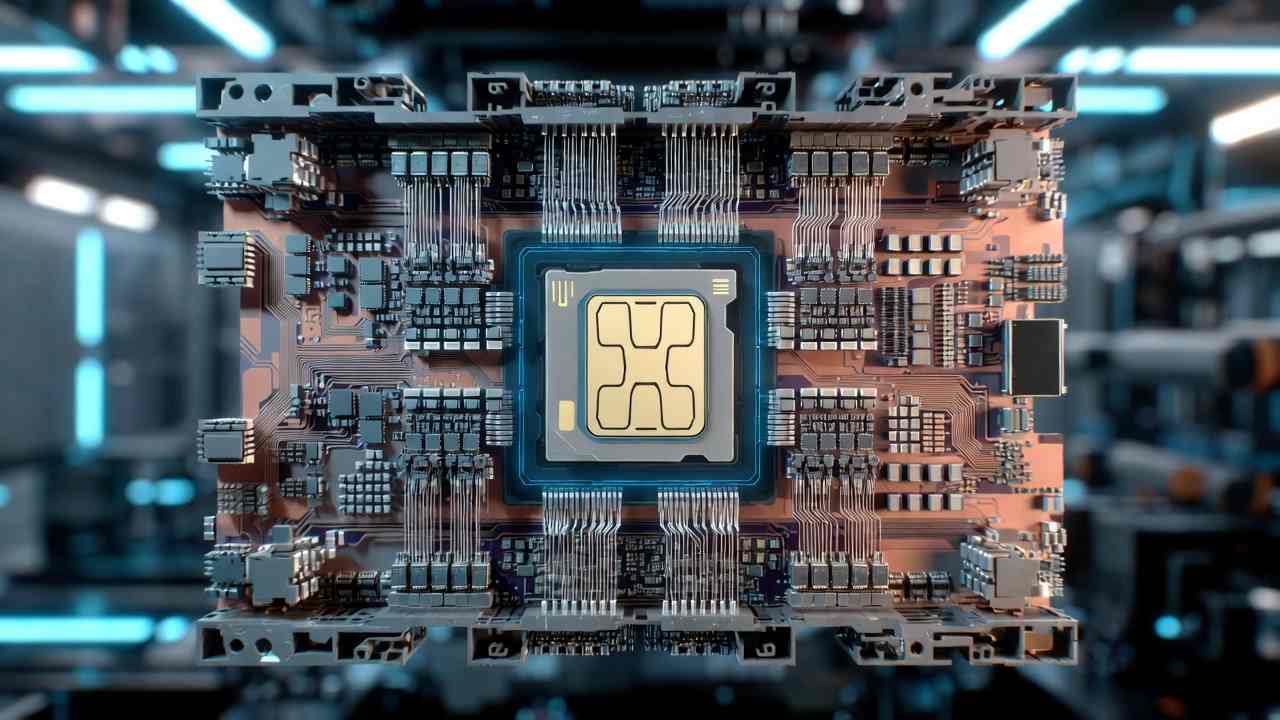
For more than three decades, mobile connectivity has depended on a removable card. First came the full-size SIM, then micro and nano variants, followed by embedded SIMs (eSIM) soldered onto device boards. Now the industry is moving toward the next step: the integrated SIM, or iSIM — a SIM implemented directly inside the main processor.
Unlike eSIM, which still exists as a separate chip on the motherboard, iSIM is integrated into the system-on-chip (SoC) itself. This architectural shift has implications far beyond saving space. It affects device security models, manufacturing workflows, supply chains, and even how mobile operators provision connectivity.
📱 From Removable Cards to Silicon Integration
Traditional SIM cards contain a secure microcontroller responsible for:
- 🔐 Storing subscriber identity credentials
- 🌐 Authenticating to mobile networks
- 📲 Running operator applications
- 🗝️ Managing encryption keys
eSIM moved this functionality onto a soldered chip, eliminating the removable card but keeping the secure element physically separate.
iSIM goes further. The SIM functionality becomes a secure subsystem inside the SoC, sharing silicon with CPU cores, GPUs, NPUs, and modem components.
This consolidation is enabled by advances in trusted execution environments and hardware isolation technologies.
🔒 Security Architecture: Isolation Without Separation
At first glance, integrating the SIM into the main processor might seem less secure. Physical separation traditionally reduces attack surfaces. However, modern iSIM designs rely on logical isolation enforced at the hardware level.
🏛️ Secure Enclave or Trusted Execution Environment (TEE)
Sensitive operations run inside a protected region inaccessible to the main operating system. Even if Android or another OS is compromised, credentials stored inside the enclave remain protected.
🔗 Hardware Root of Trust
A set of immutable cryptographic keys burned into silicon during manufacturing establishes device identity and secure boot capabilities.
🛡️ Memory and Bus Isolation
Dedicated access controls prevent unauthorized components from reading or modifying SIM data.
🔨 Tamper Resistance
Advanced packaging techniques and sensors detect physical attacks, voltage manipulation, or fault injection attempts.
Because the iSIM resides within the SoC, it benefits from the same advanced security engineering applied to payment systems, digital wallets, and biometric authentication modules.
🎯 Reduced Attack Surface in Practice
Physical SIM cards can be removed, cloned, or replaced. eSIM chips can potentially be probed on the board with specialized equipment. iSIM eliminates external interfaces entirely.
There are no exposed contacts, no removable components, and no separate chip traces accessible to attackers.
⚠️ New Risks Introduced
However, integration introduces new risks:
- Firmware vulnerabilities within the SoC
- Shared power and clock domains
- Potential side-channel attacks
- Supply-chain trust concerns
Security therefore depends heavily on silicon vendor design quality and certification.
🏭 Manufacturing Implications: Fewer Components, New Dependencies
From a hardware manufacturing perspective, iSIM simplifies device assembly.
✅ Eliminated Elements
- SIM card slot mechanisms
- Card trays and seals
- Board space for eSIM chips
- Electrical routing for SIM interfaces
📟 Ideal for Ultra-Compact Devices
- ⌚ Smartwatches
- 👓 AR glasses
- 🏃 Fitness trackers
- 🌡️ IoT sensors
- 🏥 Medical implants
Designers gain freedom to optimize for battery size, antennas, or structural integrity.
However, manufacturing becomes more tightly coupled to chipset suppliers. Connectivity identity is now tied directly to the processor, not a replaceable module.
📡 Provisioning and Supply Chain Changes
With removable SIMs, operators control distribution through physical cards. eSIM introduced remote provisioning, allowing profiles to be downloaded over the air.
iSIM continues this model but integrates provisioning deeper into the device lifecycle.
🏭 Factory Provisioning
Manufacturers may preload connectivity profiles during production, enabling devices to connect immediately upon activation.
🔁 Multi-Operator Support
Devices can store multiple operator profiles without additional hardware.
🔄 Lifecycle Management
Enterprises deploying large IoT fleets can update connectivity remotely without physical access.
This model is particularly attractive for global devices shipped across regions without country-specific variants.
🌍 Implications for IoT at Massive Scale
For large IoT deployments, the absence of physical SIM handling is transformative. Installing or replacing cards across thousands of remote devices is costly and error-prone.
iSIM enables:
- 📦 Fully sealed devices
- ⏳ Long-term reliability in harsh environments
- 💰 Reduced maintenance costs
- 🚚 Simplified logistics
In industrial contexts, removing mechanical components also improves durability against vibration, moisture, and dust.
⚡ Power Consumption and Performance
Integrating SIM functionality into the SoC can reduce power usage by eliminating external communication interfaces. Internal communication paths are shorter and more efficient.
This matters for battery-powered devices that must operate for years.
Additionally, integration may allow tighter coordination between modem and authentication processes, potentially improving connection setup times.
📜 Regulatory and Certification Considerations
Mobile connectivity hardware must meet strict security standards defined by organizations such as GSMA. iSIM implementations require certification comparable to or stricter than eSIM solutions.
Because the SIM is no longer a discrete component, certification applies to the entire chipset design. This raises development costs but ensures uniform security guarantees.
👥 Consumer Impact: Mostly Invisible, Occasionally Significant
For end users, iSIM adoption may not be obvious at first. There is no card to insert and no tray to open. Activation typically occurs through software during device setup.
✅ Benefits for Users
- 💧 Improved water resistance
- 📏 Smaller and lighter devices
- 🔧 Greater reliability
- 🌐 Easier international connectivity
⚠️ The Downside
The downside is reduced physical control. Users cannot swap SIMs between devices instantly, a capability some still value.
🚀 The Long-Term Direction
iSIM represents a broader trend in electronics: consolidation of functionality into highly integrated silicon platforms. As processes shrink and security architectures mature, fewer external components are required.
In the future, connectivity, identity, payments, and authentication may all reside within secure subsystems of a single chip.
- For manufacturers: Streamlined hardware design but increased dependence on semiconductor vendors
- For network operators: A shift toward software-defined provisioning
- For users: Simpler devices that “just connect” without manual configuration
The humble SIM card — once a visible symbol of mobile identity — is quietly disappearing into the silicon itself.
📚 References
- GSMA. (2025). iSIM: The Next Generation of Embedded SIM Technology. GSMA Security Guidelines.
- Qualcomm. (2024). Integrating iSIM into Snapdragon Platforms: Security and Supply Chain Benefits. Qualcomm Technical Brief.