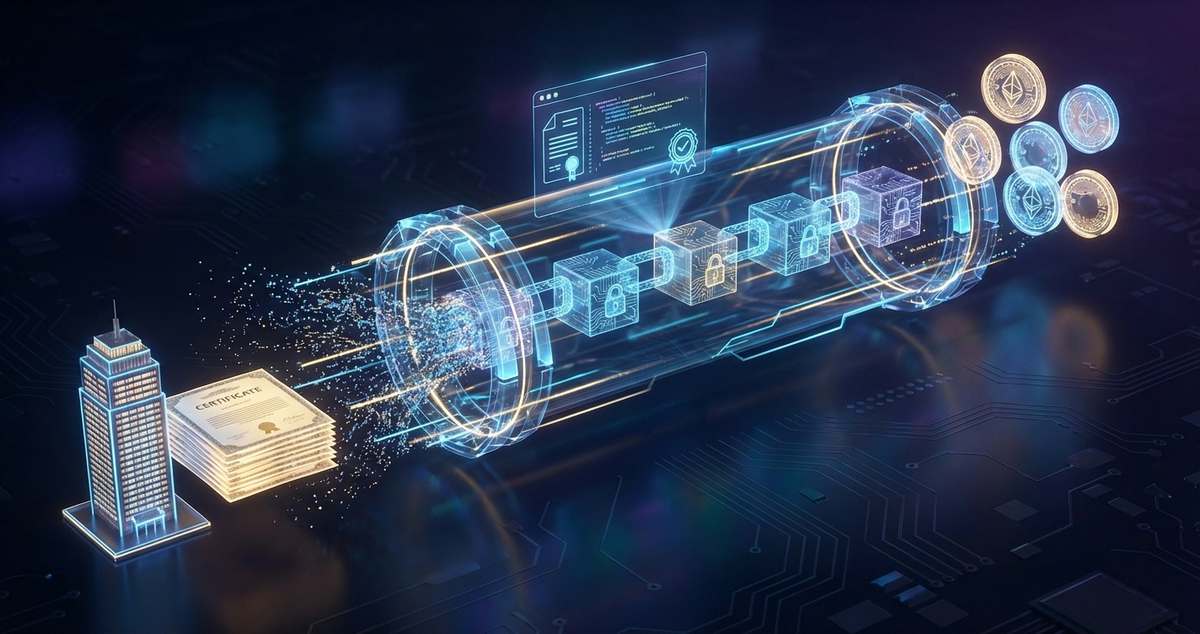
Real-world asset (RWA) tokenization has moved from experimental DeFi narrative to one of the most structurally significant developments in modern digital finance. In 2025, the conversation is no longer about whether RWAs will come on-chain—it is about how robust the infrastructure must be to support institutional-scale adoption.
Tokenizing treasury bills, private credit, real estate, and commodities introduces a hybrid stack that blends traditional finance (TradFi) controls with blockchain settlement. This article dissects the real technical and regulatory infrastructure required to make RWA tokenization viable at scale in 2025.
What RWA Tokenization Actually Means
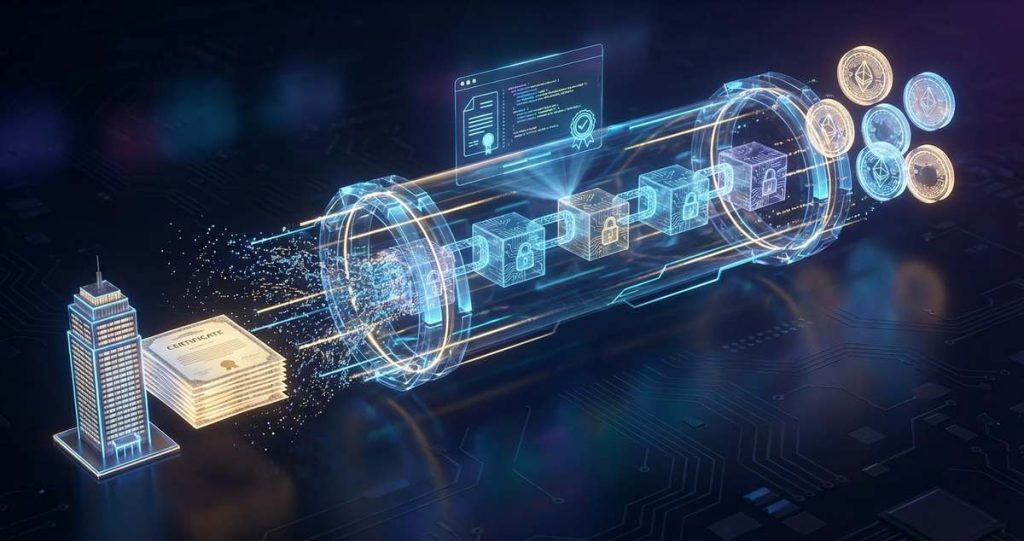
At a technical level, RWA tokenization is the process of representing ownership or claims on off-chain assets using on-chain tokens.
However, the blockchain token itself is only the visible tip of the system. A functional RWA pipeline requires five tightly integrated layers:
- Legal wrapper
- Custody and asset verification
- Oracle and data integrity
- Tokenization smart contracts
- Secondary liquidity infrastructure
Failures in any layer can break the economic validity of the token.
Layer 1: Legal and Structural Wrappers
The most underestimated component of RWA infrastructure is the legal bridge between the physical asset and the token.
Common Structures in 2025
Most institutional-grade RWAs use:
- Special Purpose Vehicles (SPVs)
- trust structures
- bankruptcy-remote entities
- regulated fund wrappers
The token typically represents one of the following:
- beneficial ownership
- revenue share
- debt claim
- fund share
Why This Matters
Without enforceable legal linkage, the token is economically meaningless. The market in 2025 is increasingly separating:
- “synthetic RWAs” (higher risk)
- “legally anchored RWAs” (institutional grade)
Serious capital is flowing only into the latter.
Layer 2: Custody and Asset Verification
Tokenization does not eliminate the need for trusted custody—it changes its role.
Off-Chain Custody Requirements
For most RWAs, especially:
- treasury instruments
- real estate
- private credit
- commodities
…a regulated custodian must hold or supervise the underlying asset.
Key requirements include:
- periodic audits
- proof-of-reserves reporting
- bankruptcy protection
- segregation of assets
Emerging Trend: Proof-of-Asset Attestations
In 2025, many platforms are moving toward cryptographically verifiable attestations that feed into on-chain systems, reducing blind trust.
Layer 3: Oracle Infrastructure
RWAs depend heavily on high-integrity data feeds.
Unlike purely crypto-native assets, RWAs require continuous off-chain data such as:
- NAV updates
- interest accrual
- default events
- collateral valuation
- redemption status
Oracle Failure Is a Systemic Risk
Weak oracle design can cause:
- mispricing
- liquidation errors
- accounting drift
- regulatory exposure
Institutional RWA systems now typically use:
- multi-source data aggregation
- signed data attestations
- heartbeat monitoring
- fallback mechanisms
Oracle robustness is becoming a key competitive differentiator.
Layer 4: Tokenization Smart Contract Stack
At the blockchain layer, RWA tokens are becoming significantly more sophisticated.
Core Contract Features in 2025
Institutional-grade RWA tokens often include:
- transfer restrictions (whitelisting)
- compliance hooks
- identity gating
- programmable cash flows
- upgradeability controls
These differ sharply from early ERC-20 style tokens.
Compliance-Aware Token Standards
We are seeing increased adoption of:
- permissioned token frameworks
- ERC-3643-style compliance layers
- modular smart contract architectures
The direction is clear: RWA tokens are becoming regulated financial primitives, not simple crypto assets.
Layer 5: Liquidity and Secondary Markets
Tokenization without liquidity is economically weak.
Where RWAs Trade in 2025
Liquidity is emerging across three environments:
1. Permissioned DeFi pools
- KYC-gated
- institutional participants
- programmable settlement
2. Alternative trading systems
- regulated digital securities venues
- limited retail access
3. Hybrid on/off-chain markets
- partial on-chain settlement
- traditional broker integration
However, secondary liquidity remains one of the biggest bottlenecks.
The Institutional Shift Happening Now
The most important change in 2025 is who is building.
Early RWA experiments were crypto-native. The current wave includes:
- asset managers
- banks
- fund administrators
- fintech infrastructure providers
This shift is driving:
- stronger compliance architecture
- more conservative token design
- deeper integration with TradFi rails
Key Risks Still Unresolved
Despite rapid progress, several structural risks remain.
Regulatory Fragmentation
Different jurisdictions treat tokenized securities differently, creating:
- cross-border friction
- custody complexity
- licensing uncertainty
Liquidity Illusion Risk
Many RWA tokens appear liquid but rely on thin markets. Stress scenarios remain largely untested.
Oracle and Data Trust
Even with improvements, oracle integrity remains a systemic vulnerability, especially for private credit and real estate RWAs.
Outlook for the Rest of the Decade
Based on current infrastructure maturity, the most likely trajectory is:
2025–2026
- rapid institutional pilot expansion
- treasury and private credit dominance
- compliance-first architectures
2027–2029
- deeper integration with traditional capital markets
- improved secondary liquidity
- more standardized token frameworks
2030 and beyond
- RWAs potentially become a core settlement layer in global finance
- increasing retail exposure via regulated channels
Final Assessment
RWA tokenization in 2025 is no longer experimental—it is entering the early institutional phase. But the real story is not the token itself. The true battleground is infrastructure: legal enforceability, custody integrity, oracle reliability, and compliant smart contract design.
Projects that treat tokenization as merely “putting assets on-chain” will struggle. The winners will be those that build full-stack, regulation-aware financial infrastructure capable of supporting trillions in real-world value.
The token is just the interface. The infrastructure is the product.
References
- BlackRock. (2025). The State of Asset Tokenization: Infrastructure and Institutional Adoption. BlackRock Digital Assets Report.
- Morgan, J. (2024). Legal and Technical Frameworks for RWA Tokenization. Stanford Journal of Blockchain Law & Policy, 7(1), 45-68.