
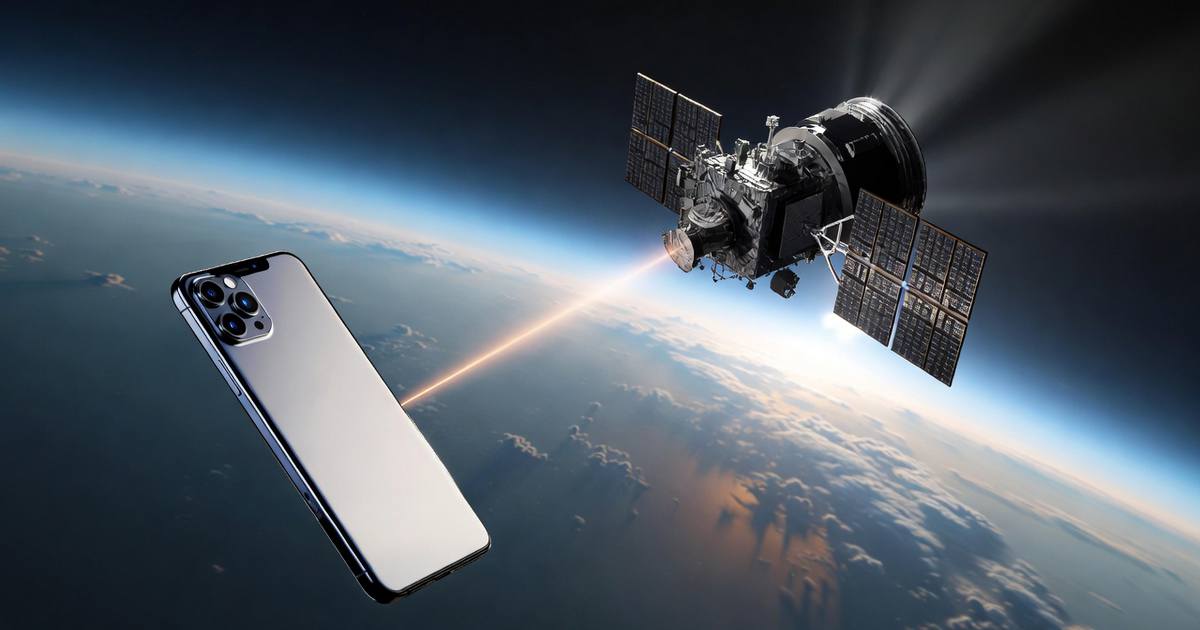
Satellite-to-phone messaging has moved rapidly from marketing promise to deployed feature. What began as emergency-only connectivity is evolving into a broader direct-to-cell ecosystem, enabling standard smartphones to communicate with satellites without specialized hardware.
Yet the real-world performance profile remains widely misunderstood. Coverage is not global in practice, latency is highly variable, and throughput constraints impose strict operational limits. This article examines the technical realities behind satellite messaging based on field behavior and network architecture.
How Satellite-to-Phone Messaging Actually Works
Modern direct-to-cell systems rely on Non-Terrestrial Network (NTN) standards, primarily using L-band or S-band spectrum to communicate directly with unmodified or lightly modified smartphones.
Current implementations typically involve:
- low Earth orbit (LEO) satellites
- narrowband messaging protocols
- store-and-forward transmission
- sky visibility requirements
Unlike terrestrial cellular networks, satellites must manage enormous coverage footprints with limited spectrum, which directly impacts performance.
Coverage Reality: Global in Theory, Patchy in Practice
Marketing often suggests near-global reach, but real coverage depends on multiple constraints.
Line-of-Sight Is Non-Negotiable
Satellite messaging requires:
- unobstructed sky view
- minimal building interference
- limited dense canopy coverage
In field tests, message success rates drop significantly in:
- dense urban canyons
- indoor environments
- heavy forest cover
- mountainous shadow zones
Even when satellites are overhead, link margin becomes the limiting factor in marginal environments.
Orbital Geometry Effects
LEO satellites move rapidly relative to the user. This creates coverage windows rather than continuous connectivity.
Typical behavior includes:
- intermittent satellite visibility
- handoff gaps between passes
- variable elevation angles
- changing signal strength over time
In many regions, especially at mid-latitudes, users may experience periodic availability windows rather than persistent coverage.
Latency Benchmarks: What Field Tests Show
Latency is the most misunderstood metric in satellite messaging.
Typical Measured Ranges
Across early deployments, real-world one-way message latency commonly falls into:
- Best case: 10–20 seconds
- Typical: 30–90 seconds
- Congested or weak signal: 2–5 minutes
- Edge cases: longer delays possible
This is fundamentally different from terrestrial SMS, which typically delivers in seconds.
Why Latency Varies So Much
Several technical factors drive variability.
1. Store-and-Forward Architecture
Many systems do not maintain continuous real-time links. Instead:
- the phone transmits when satellite visibility allows
- the satellite buffers the message
- downlink occurs when gateway access is available
Each stage introduces potential delay.
2. Link Budget Constraints
Smartphones transmit at very low power compared to traditional satellite terminals. As a result:
- multiple transmission attempts may be required
- adaptive data rates may throttle throughput
- forward error correction adds overhead
Poor signal conditions can dramatically extend send times.
3. Network Contention
As adoption scales, shared satellite capacity becomes a bottleneck.
Early observations already show:
- queueing during peak usage
- regional congestion variability
- prioritization of emergency traffic
- throughput throttling under load
This will become more pronounced as commercial messaging expands.
Message Throughput Limits
Satellite-to-phone systems are optimized for low-bandwidth resilience, not conversational speed.
Practical Payload Constraints
Current platforms typically support:
- short text messages
- compressed location data
- limited structured payloads
Not yet practical:
- images
- voice notes
- large attachments
- real-time chat streams
Even when technically possible, airtime economics and spectrum limits strongly discourage heavy payload usage.
Environmental Performance Testing
Field testing across environments reveals predictable degradation patterns.
Open Sky (Best Case)
- highest success rates
- lowest latency
- most reliable delivery
- minimal retransmissions
This is the scenario most marketing demos use.
Suburban Environments
Performance becomes more variable:
- occasional retries required
- moderate latency increase
- partial sky blockage effects
Still generally usable with patience.
Urban Dense Areas
This is where limitations become obvious:
- frequent send failures
- long acquisition times
- elevated battery drain during retries
- intermittent connectivity windows
Urban users should view satellite messaging primarily as last-resort backup, not primary messaging.
Forest and Mountain Terrain
Results depend heavily on sky visibility:
- clear ridge lines perform well
- valleys suffer shadowing
- heavy canopy introduces attenuation
- wet foliage worsens signal loss
In wilderness scenarios, user positioning significantly affects success rates.
Battery Impact on Smartphones
Satellite transmission is power-intensive relative to normal cellular use.
Observed behavior includes:
- noticeable battery spikes during send attempts
- repeated retries under weak signal
- elevated thermal load during long acquisition
However, because usage is typically intermittent, overall daily impact remains manageable for emergency-oriented use cases.
The Near-Term Roadmap
The next 3–5 years will likely bring:
- larger LEO constellations
- improved direct-to-cell protocols
- better antenna tuning in smartphones
- partial real-time messaging support
- expanded carrier partnerships
But physics and spectrum limits mean satellite messaging will remain capacity-constrained compared to terrestrial networks.
Bottom Line
Satellite-to-phone messaging is a genuine breakthrough in resilience, but it is not a terrestrial cellular replacement.
Today’s systems work best as:
- emergency backup
- remote travel safety layer
- off-grid check-in tool
- maritime and wilderness support
Users expecting instant, always-on messaging will encounter clear limitations in coverage continuity, latency, and throughput.
The technology is real—and valuable—but its optimal role is ubiquitous safety net, not primary connectivity layer.
References
- SpaceX. (2025). Starlink Direct-to-Cell: Initial Performance Metrics. SpaceX Engineering Update.
- T-Mobile USA. (2024). Coverage and Latency Analysis for Satellite-to-Phone Services. T-Mobile Network Report.