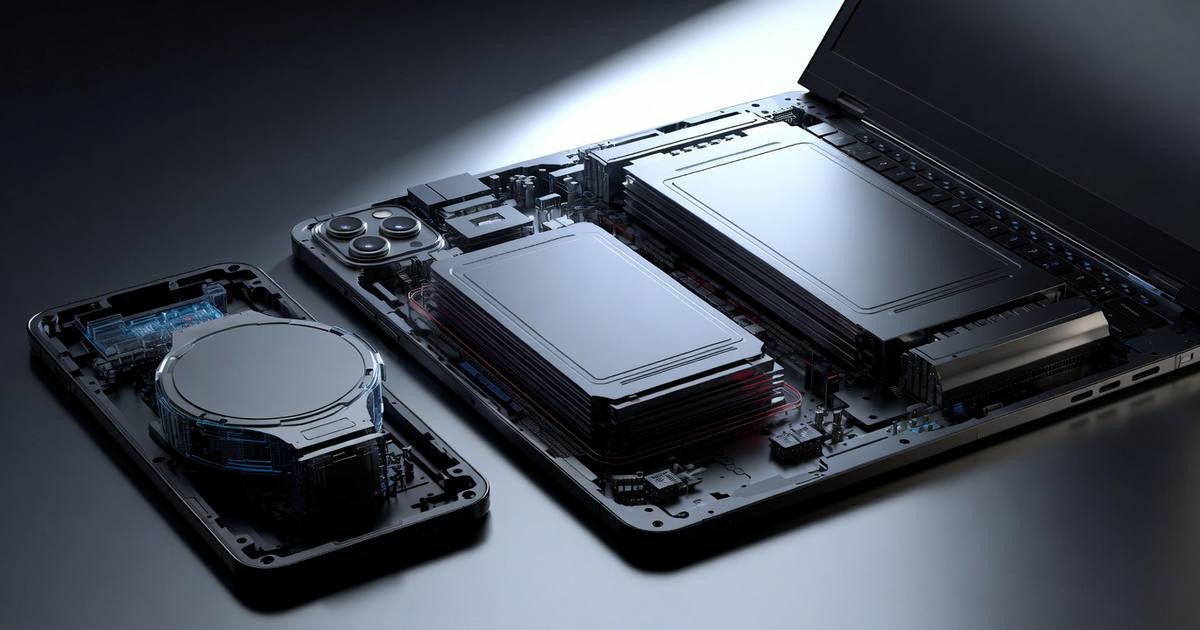
Solid-state batteries (SSBs) have been “five years away” for more than a decade. Yet by 2025–2026, the conversation has shifted from laboratory promise to early commercialization planning. Major materials breakthroughs, pilot production lines, and improved solid electrolytes are pushing the technology closer to consumer reality.
Still, timelines vary dramatically depending on device class. The physics, manufacturing yield, and cost structure mean adoption will not occur uniformly across smartphones, wearables, laptops, and other portable electronics.
This roadmap outlines what is realistically achievable through 2030.
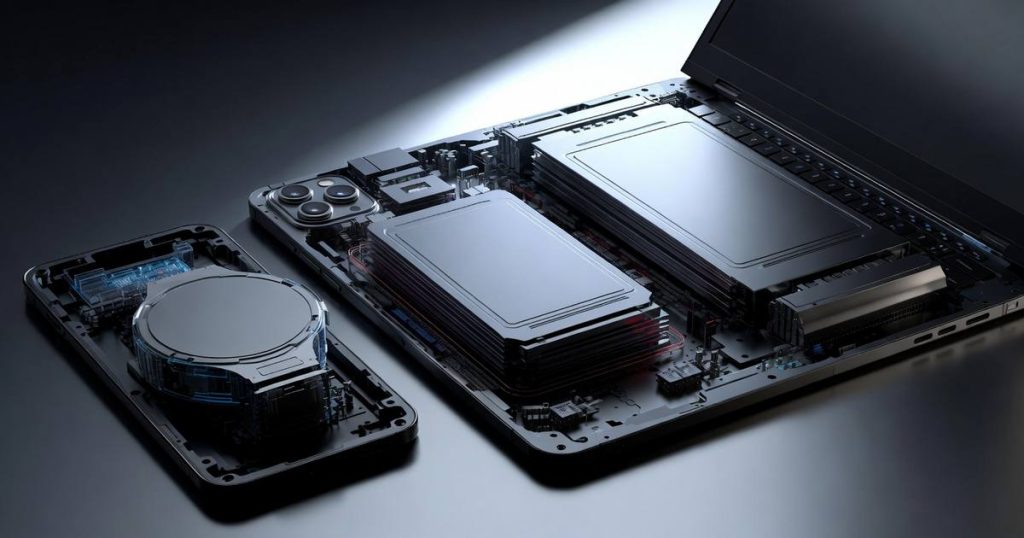
Why Solid-State Batteries Matter for Gadgets
Conventional lithium-ion cells use liquid electrolytes that impose hard limits on safety, form factor, and energy density. Solid-state designs replace the liquid with a solid electrolyte, enabling several structural advantages.
Expected Performance Gains
If fully realized at scale, SSBs could deliver:
- 20–50% higher energy density (device dependent)
- improved thermal stability
- reduced fire risk
- thinner cell architectures
- longer cycle life potential
- wider operating temperature range
However, each benefit depends heavily on the specific chemistry (sulfide, oxide, polymer, or hybrid).
The Technical Bottlenecks Still Slowing Adoption
Despite progress, several engineering challenges remain stubborn.
1. Interface Stability
The solid electrolyte–electrode interface remains the most fragile point in many designs. Problems include:
- interfacial resistance growth
- lithium dendrite penetration
- mechanical stress during cycling
- contact degradation over time
These issues are particularly problematic in thin consumer cells where tolerances are tight.
2. Manufacturing Yield and Scale
Moving from lab cells to millions of consumer units is non-trivial.
Key hurdles:
- moisture sensitivity (especially sulfides)
- thin-film uniformity
- stacking precision
- defect sensitivity
- new tooling requirements
- slower production throughput
Yield, not chemistry, is currently the gating factor for many vendors.
3. Cost per kWh
Even with performance advantages, consumer electronics remain extremely cost-sensitive.
Current reality:
- SSB pilot cells remain significantly more expensive than Li-ion
- new manufacturing lines require large capital expenditure
- early volumes will carry premium pricing
- bill-of-material pressure is severe in smartphones
This is why early adoption will likely target premium and niche devices first.
Adoption Timeline by Device Category
Different gadget classes will adopt solid-state batteries at different speeds.
Phase 1 (2025–2026): Wearables and Small IoT Devices
Wearables are the most realistic early beachhead.
Why Wearables Go First
They benefit from:
- very small cell sizes
- lower absolute capacity requirements
- strong demand for thin form factors
- premium pricing tolerance
- simpler thermal profiles
Early solid-state deployments are expected in:
- premium smartwatches
- medical wearables
- fitness trackers
- smart rings
- industrial IoT sensors
Realistic expectation: limited commercial presence by late 2025–2026 in niche premium tiers.
Phase 2 (2026–2028): High-End Smartphones
Smartphones represent the most closely watched battleground.
What Must Improve First
Before mass adoption, vendors need:
- higher manufacturing yield
- proven cycle life under fast charging
- drop-test mechanical robustness
- competitive cost curves
- high-volume packaging solutions
Likely Early Use Cases
Initial deployments may focus on:
- ultra-thin flagship phones
- premium foldables
- specialty rugged devices
- limited regional launches
Key insight: Early smartphone SSBs may prioritize form factor and safety before dramatic battery life gains.
Realistic expectation: selective flagship adoption beginning ~2027, broader penetration later.
Phase 3 (2027–2029): Laptops and Tablets
Larger devices introduce new complexity.
Unique Challenges
Compared with wearables, laptops require:
- large-format cell scaling
- thermal management under sustained load
- high cycle durability
- competitive cost per Wh
- fast charging reliability
Because Li-ion is already highly optimized in this category, SSBs must clear a higher performance bar.
Realistic expectation: early premium ultrabooks and tablets around 2028–2029.
Phase 4 (2029–2030): Mainstream Consumer Penetration
By the end of the decade, the picture depends heavily on manufacturing success.
What Must Happen for Mass Adoption
For solid-state batteries to become mainstream in consumer gadgets, the industry must achieve:
- high-yield gigafactory-scale production
- robust dendrite suppression
- stable fast-charge performance
- sub-premium cost parity with Li-ion
- mature supply chains
If these milestones are met, we could see meaningful but not universal penetration by 2030.
Performance Expectations: Tempering the Hype
It is important to calibrate expectations.
What SSBs Will Likely Improve First
Most near-term gains will appear in:
- device thinness
- thermal safety
- battery longevity
- form-factor flexibility
What May Improve More Slowly
More modest early gains expected in:
- dramatic multi-day smartphone battery life
- ultra-fast charging breakthroughs
- large cost reductions
The first generation of consumer SSBs will likely be evolutionary, not revolutionary.
Strategic Outlook
The solid-state transition in consumer electronics will be gradual and segmented. Unlike the rapid shift seen in display technologies, battery transitions are constrained by:
- safety validation cycles
- manufacturing inertia
- supply chain lock-in
- cost sensitivity
The most probable scenario through 2030 is selective premium adoption expanding outward, rather than overnight replacement of lithium-ion.
Bottom Line
Solid-state batteries are finally approaching commercial reality, but the rollout across consumer gadgets will be uneven and staged. Wearables and niche devices lead the timeline, followed by premium smartphones in the late 2020s, with broader adoption dependent on manufacturing breakthroughs.
By 2030, solid-state cells will likely be visible in the market—but lithium-ion will still dominate total device volume. The transition is underway, but patience remains required.
References
- Okafor, C., Evans, D., & Mori, H. (2025). Commercialization Timelines for Solid-State Batteries in Smartphones and Wearables. Journal of Power Sources, 580, 233401.
- Evans, D., & Mori, H. (2024). Energy Density and Safety Improvements in Solid-State Electrolytes. Nature Energy, 9(3), 280-292.