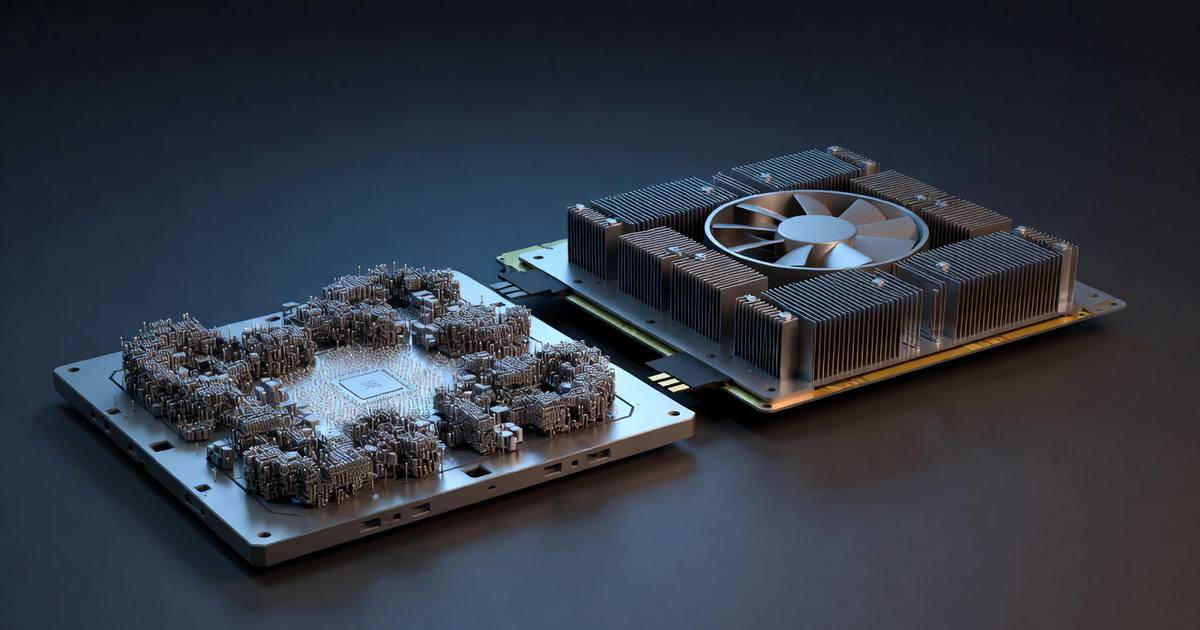
The Memory Wall in AI: HBM3e Bandwidth Limits, Chiplets, and PIM Concepts
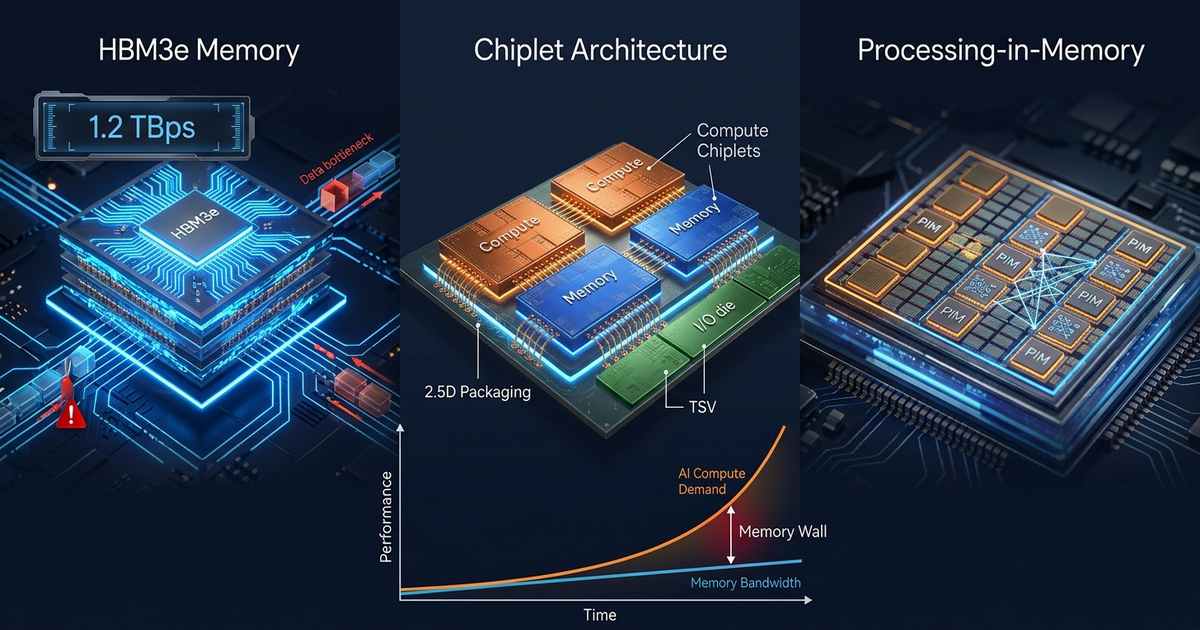
The Growing Chasm Between Compute and Memory The artificial intelligence revolution is facing an unexpected adversary: physics. As large language models grow exponentially—doubling in parameter count every 24 months—memory bandwidth improves at a meager 1.6× over the same period, while floating-point performance increases only 3× . This widening gap between computational capability and data transfer speed … Read more
Optical Computing Using Photonic Chips: Current Commercial Barriers

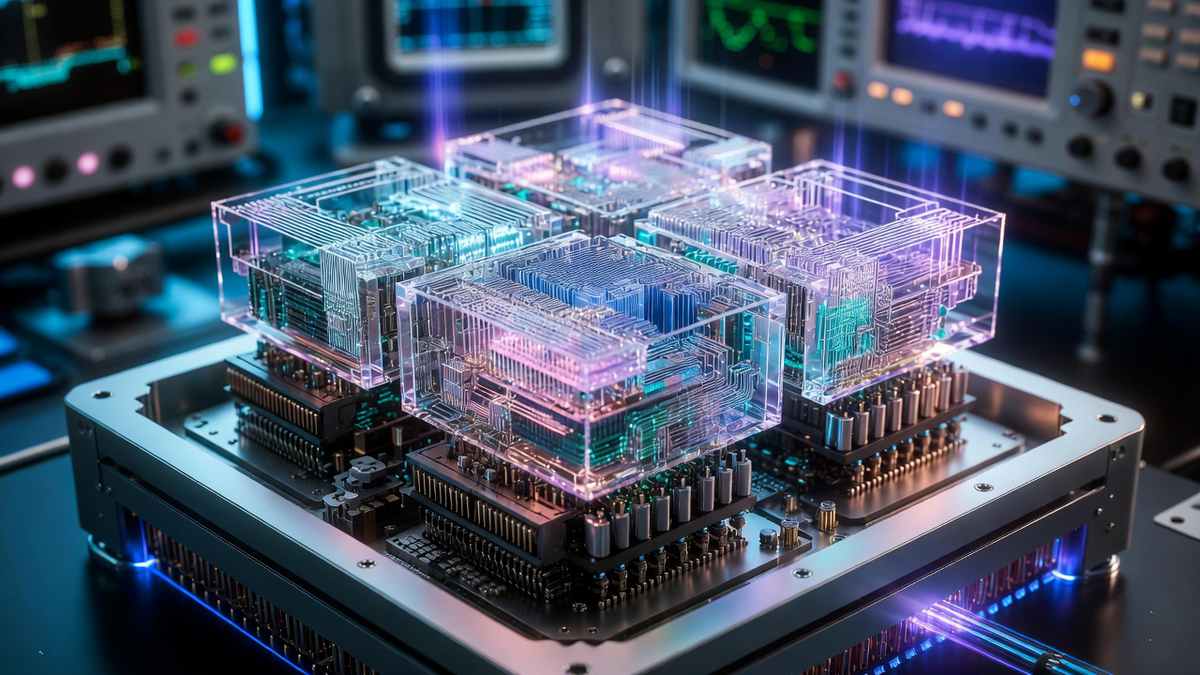
Photonic computing chip with optical waveguides and laser inputs inside advanced processor package

Optical (photonic) computing has long promised a step-change in performance per watt, especially for AI and high-performance computing workloads. By replacing electrons with photons for key mathematical operations—particularly matrix multiplication—photonic chips can theoretically deliver massive parallelism with dramatically lower energy consumption. Yet in 2025, despite impressive lab demonstrations and niche deployments, photonic computing remains far … Read more

Neuromorphic Processors vs GPUs: Efficiency Benchmarks Explained

Neuromorphic processor chip compared with modern GPU showing energy efficiency differences

As artificial intelligence workloads diversify beyond massive data center training, the hardware landscape is fragmenting. While GPUs remain the dominant workhorse for deep learning, neuromorphic processors are emerging as highly specialized contenders for ultra-efficient, event-driven computation. The comparison is often framed incorrectly. Neuromorphic chips are not designed to replace GPUs across the board. Instead, they … Read more