First Generation of Screenless AI Devices: Limitations and Potential

Wearable screenless AI assistant device being used hands-free in everyday environment

The idea of screenless AI devices—wearables that replace traditional smartphone interaction with ambient, voice-first computing—has rapidly moved from concept demos into early commercial products. AI pins, voice wearables, and context-aware assistants promise a future where users interact with intelligence rather than apps. But the first generation of these devices in 2024–2025 reveals a clear pattern: … Read more


Digital Twin Patients in Hospitals: Infrastructure Requirements

Hospital digital twin patient system showing real-time data streams feeding a virtual patient model

Digital twin patients—virtual, continuously updated computational models of individual patients—are moving from research pilots into early clinical deployments. By integrating real-time physiological data, historical medical records, imaging, and predictive models, digital twins promise more proactive and personalized care. However, the technical and operational infrastructure required to support clinical-grade digital twins is substantial. Hospitals cannot simply … Read more

Account Abstraction Wallets: UX Breakthrough for Mass Adoption

Smart contract crypto wallet interface showing gasless transaction and social recovery features

For over a decade, crypto wallets have remained one of the biggest friction points in Web3 adoption. Seed phrases, gas fees, failed transactions, and confusing signatures continue to intimidate mainstream users. Account abstraction (AA) wallets—particularly those enabled by ERC-4337—represent the most credible attempt yet to fix the user experience at the protocol level. In 2025, … Read more

Smartphone NPUs vs Cloud AI: Energy Cost Comparison

Smartphone neural processing unit performing on-device AI inference compared with cloud data center processing

The rapid deployment of dedicated Neural Processing Units (NPUs) in smartphones has fundamentally changed the economics of AI inference. Tasks that once required round trips to cloud GPUs can now execute locally on-device. But the real question in 2025 is not capability—it is energy and system cost efficiency at scale. This article provides a grounded … Read more

Optical Computing Using Photonic Chips: Current Commercial Barriers

Photonic computing chip with optical waveguides and laser inputs inside advanced processor package

Optical (photonic) computing has long promised a step-change in performance per watt, especially for AI and high-performance computing workloads. By replacing electrons with photons for key mathematical operations—particularly matrix multiplication—photonic chips can theoretically deliver massive parallelism with dramatically lower energy consumption. Yet in 2025, despite impressive lab demonstrations and niche deployments, photonic computing remains far … Read more

MicroLED vs OLED in Next-Gen Wearables: Efficiency and Burn-In Analysis

Side-by-side comparison of MicroLED and OLED smartwatch displays showing brightness and pixel structure

Display technology is becoming one of the most critical differentiators in next-generation wearables. As smartwatches, AR glasses, and AI-powered pins push toward always-on operation and ultra-compact form factors, the limitations of traditional OLED panels are becoming more visible. MicroLED is emerging as a potential successor — but the transition is far from straightforward. This analysis … Read more

Brain-Computer Interfaces: Signal Bandwidth and Real-World Constraints

Illustration of brain-computer interface connecting neural signals to an external device with real-time signal flow

Brain-computer interfaces (BCIs) have advanced rapidly from experimental labs to pilot real-world applications. From controlling prosthetic limbs to communicating via neural signals, BCIs promise to unlock direct interaction between human cognition and external devices. Yet one of the key limiting factors remains signal bandwidth — the rate and fidelity at which neural data can be … Read more

Modular Blockchain Architecture: Data Availability Layer Explained

Diagram illustrating a modular blockchain with separate consensus, execution, and data availability layers

The rise of modular blockchain designs has transformed the scalability and architecture of decentralized networks. Unlike monolithic chains, modular blockchains separate consensus, execution, and data availability into specialized layers. Among these, the Data Availability Layer (DAL) plays a critical role in ensuring that blocks can be securely verified and reconstructed by all participants without overwhelming … Read more

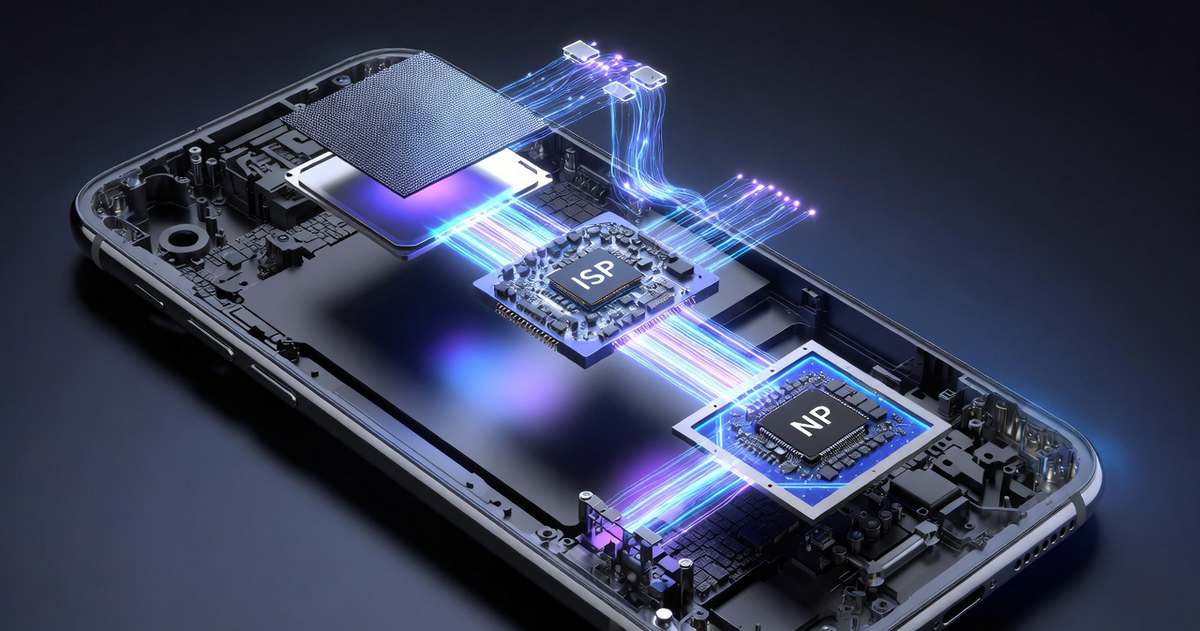
AI ISP Pipelines in Smartphone Cameras: 2025 Architecture Breakdown

AI-powered image signal processor pipeline inside a modern smartphone camera system

By 2025, smartphone camera performance is determined less by raw sensor specifications and more by the sophistication of the AI-augmented Image Signal Processor (ISP) pipeline. Modern flagships execute a tightly orchestrated sequence of classical image processing and neural inference steps between photon capture and final image output. The competitive edge now lies in how efficiently … Read more

The Rise of AI PCs with Dedicated NPUs in 2025 Hardware Cycles

Modern AI PC motherboard showing integrated neural processing unit for on-device AI acceleration

The 2025 PC hardware cycle marks a structural shift in personal computing: AI acceleration is moving from the cloud and GPU into the client device itself. The defining feature of this transition is the integration of dedicated Neural Processing Units (NPUs) into mainstream laptop and desktop silicon. While earlier PCs could run AI workloads through … Read more