DSP + NPU Co-Design for Always-On Hearable AI Under 10 mW
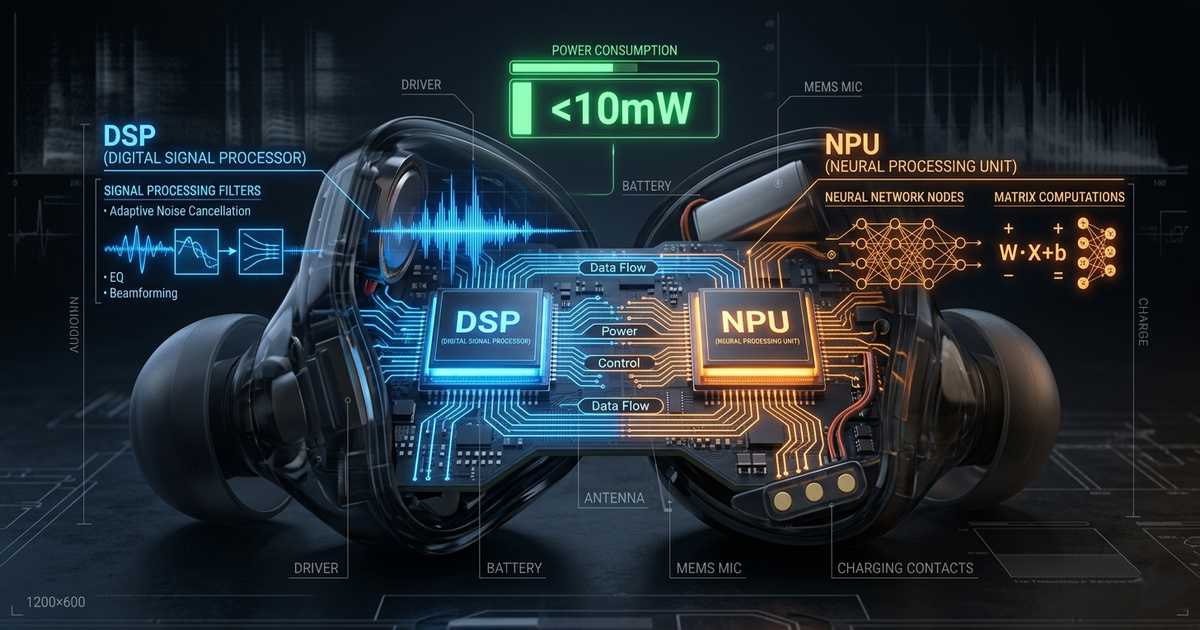
The conventional wisdom has long held that deploying continuous, real-time speech AI on battery-constrained wireless hearables is nearly impossible. Streaming deep learning models demand constant audio processing, imposing strict computational and I/O constraints that seem incompatible with the milligram-scale batteries inside true wireless earbuds. Yet 2025 marks an inflection point. Through sophisticated DSP + NPU … Read more


Nanoparticle Drug Delivery in Cancer: Targeting & Toxicity

Medical illustration of nanoparticles delivering chemotherapy drugs directly to a tumor while sparing healthy tissue.

Traditional chemotherapy faces a fundamental limitation: most anticancer drugs are toxic to both malignant and healthy cells. Systemic distribution leads to well-known side effects — hair loss, immune suppression, gastrointestinal damage, and organ toxicity. The challenge is not only killing cancer cells but doing so selectively. Nanoparticle drug delivery systems aim to change this equation. … Read more

Cross-Chain Bridges vs Messaging Protocols: Exploits & Fixes

Visualization of digital bridge connecting two blockchains with hacker breach on one side and secure messaging nodes on the other.

Blockchains were designed as isolated systems. Bitcoin cannot natively read Ethereum’s state, and Ethereum cannot directly verify transactions on other chains without external mechanisms. As decentralized finance expanded, the need to move assets across chains created a new class of infrastructure: cross-chain bridges. Unfortunately, bridges also became the single largest attack surface in the crypto … Read more

Integrated SIM (iSIM): Security and Manufacturing Impact

System-on-chip with integrated SIM module highlighted, showing secure enclave and cellular connectivity inside a smartphone processor.

For more than three decades, mobile connectivity has depended on a removable card. First came the full-size SIM, then micro and nano variants, followed by embedded SIMs (eSIM) soldered onto device boards. Now the industry is moving toward the next step: the integrated SIM, or iSIM — a SIM implemented directly inside the main processor. … Read more

TinyML at Scale: Quantization for Sub-10 mW Sensors

Ultra-low-power environmental sensor node running TinyML inference on a coin-cell battery in an industrial IoT setting.

Running machine learning on a cloud server is easy. Running it on a device that must survive for years on a coin-cell battery is not. TinyML — the practice of deploying machine learning models on microcontrollers and ultra-low-power processors — exists precisely to solve this problem. At scale, the real constraint isn’t compute capability but … Read more

Non-Invasive Glucose Watches: Optics vs Bioimpedance

Prototype smartwatch using optical and bioimpedance sensors to measure blood glucose non-invasively on the wrist.

For decades, glucose monitoring has meant one thing: needles. Even with continuous glucose monitors (CGMs), users still insert a tiny sensor under the skin. The promise of a truly non-invasive smartwatch — one that reads glucose through intact skin — has hovered between breakthrough and hype for nearly 20 years. Between 2025 and 2028, however, … Read more

CRISPR Base Editing vs Prime Editing: Therapeutic Comparison

Comparison of CRISPR base editing and prime editing mechanisms for therapeutic genome correction

Gene editing has undergone a revolution over the last decade, with CRISPR technologies moving from proof-of-concept experiments into early therapeutic applications. Among these, base editing and prime editing have emerged as two of the most promising approaches for correcting point mutations and small genetic defects without introducing double-strand breaks (DSBs). In 2025, both methods are … Read more

AI Agents Managing Crypto Portfolios: Emerging Risks

AI agent monitoring cryptocurrency markets and managing portfolio allocations autonomously

The rise of AI agents capable of autonomously managing cryptocurrency portfolios represents a new frontier in algorithmic finance. In 2025, several platforms allow AI-driven decision-making to execute trades, rebalance assets, and optimize yields without human intervention. These tools promise speed, precision, and access to complex strategies previously reserved for professional traders. However, as these agents … Read more

Advanced Vapor Chamber Cooling in Flagship Mobile SoCs

Flagship smartphone with vapor chamber cooling layer showing heat distribution across SoC and GPU

As mobile SoCs become more powerful, integrating dedicated NPUs, high-frequency CPUs, and multi-core GPUs, thermal management has become a critical design challenge. Flagship smartphones in 2025 routinely push sustained workloads such as AI inference, 3D gaming, and real-time video processing. Without effective cooling, these workloads trigger thermal throttling, reducing performance and user experience. As AI … Read more

RISC-V Acceleration in AI Edge Devices: Adoption Trends

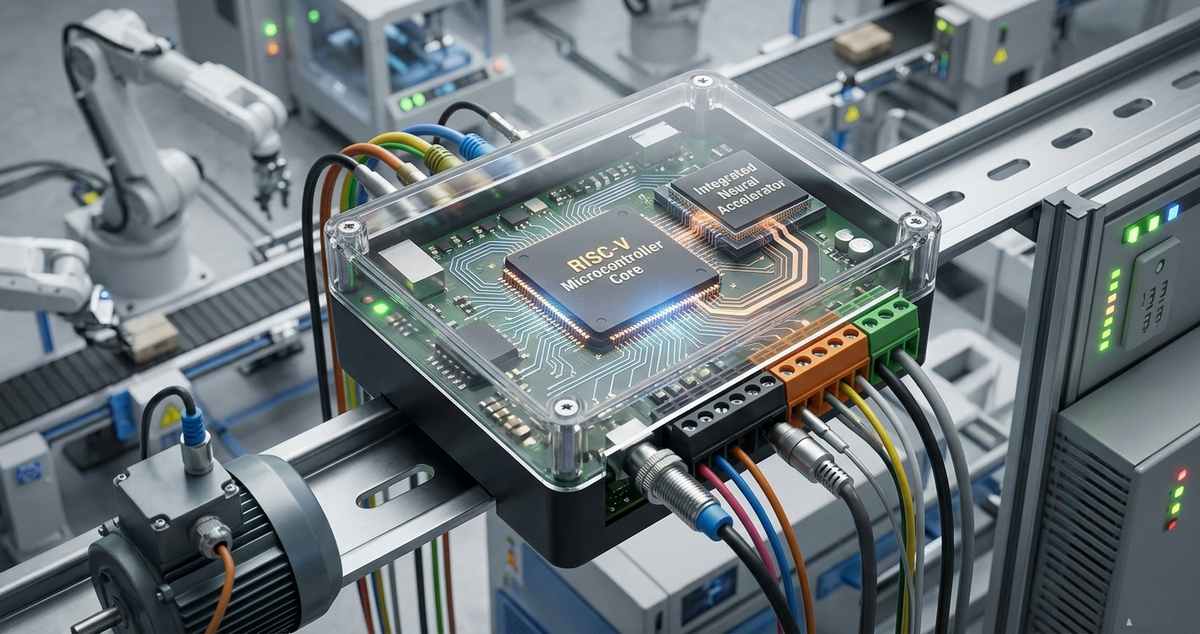
RISC-V AI edge device showing microcontroller core and integrated neural accelerator in an industrial IoT environment

The RISC-V open-source instruction set architecture (ISA) has rapidly moved from academic interest to commercial relevance, particularly in AI edge computing. In 2025, RISC-V designs are increasingly adopted in devices ranging from smart cameras and IoT sensors to AI accelerators embedded in industrial and consumer systems. Edge AI workloads demand low latency, energy efficiency, and … Read more